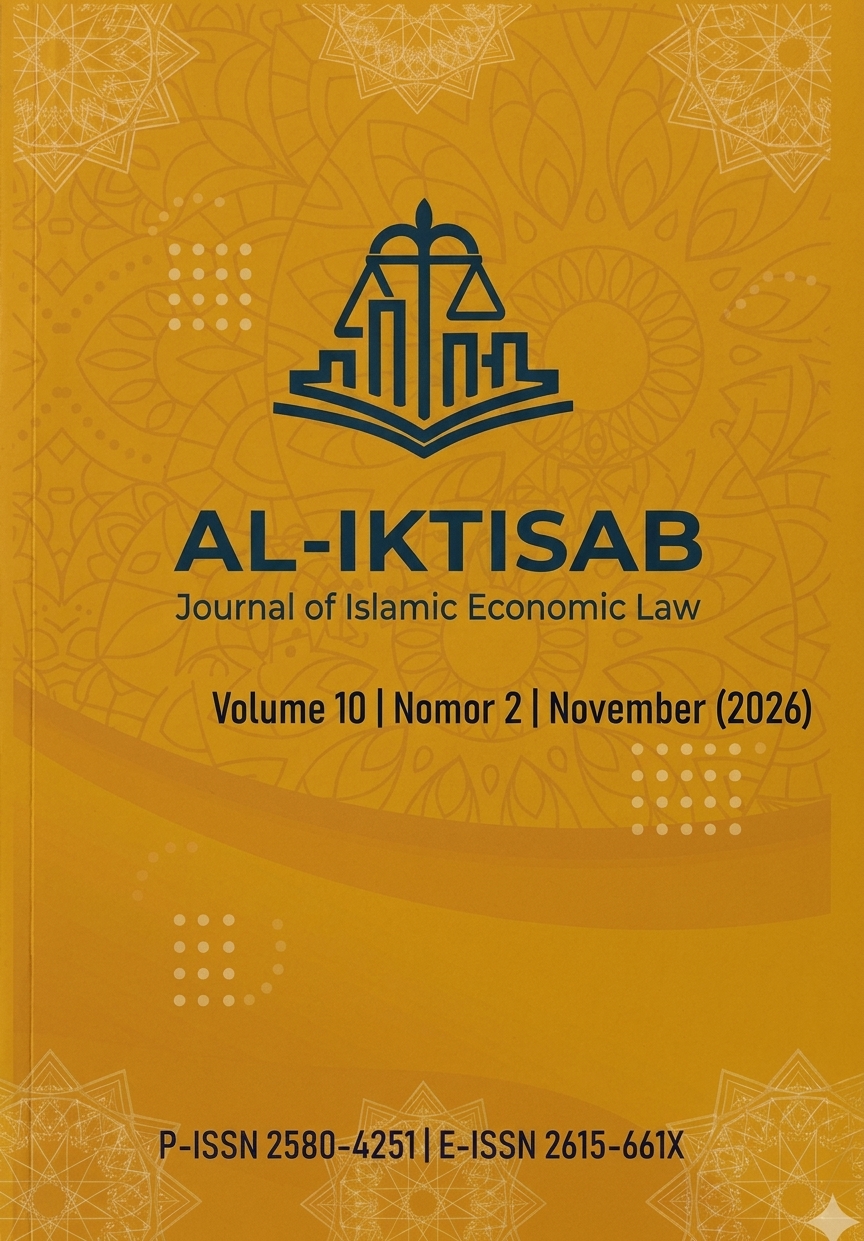
State Religion Relations in Halal Product Assurance Legislation in Indonesia
DOI:
https://doi.org/10.21111/al-iktisab.v10i2.33Keywords:
State Religion, Halal Product , Assurance, Legislation, IndonesiaAbstract
The growth of the global halal industry has prompted Indonesia to reform its halal product assurance system, particularly the governance of halal certification. Before the enactment of Law No. 33 of 2014 on Halal Product Assurance, halal certification conducted by the Assessment Institute for Foods, Drugs, and Cosmetics of the Indonesian Ulema Council (LPPOM MUI) was based on religious rulings that did not have binding force as public law. The law marked a significant step in incorporating MUI fatwas into the national legal system, shifting halal certification from a voluntary to a mandatory scheme. This change raised questions about the relationship between religion and the state, particularly concerning the incorporation of religious norms into positive law and the distribution of authority between MUI and the Halal Product Assurance Agency (BPJPH). This study examines the formalization of MUI fatwas in halal product assurance legislation and its legal implications for the distribution of authority between MUI and BPJPH. It employs normative legal research using statutory, historical, and conceptual approaches. Legal materials were collected through library research and analyzed qualitatively using content analysis to examine relevant legal norms, regulations, and fatwas. The findings indicate that formalizing MUI fatwas does not transfer MUI’s substantive authority to determine product halal status. Instead, it restructures the relationship between religious and state authorities through a symbiotic division of responsibilities. MUI retains its role in determining halal status through fatwas, while BPJPH administers halal certification. This institutional arrangement strengthens legal certainty, consumer protection, and the development of Indonesia’s halal industry. However, legal certainty in practice depends on clear coordination among MUI, BPJPH, Halal Inspection Agency (LPH), and other relevant government institutions. Accordingly, this study recommends establishing integrated standard operating procedures, clarifying the supervisory mechanisms of Halal Product Assurance Supervisors, and strengthening the provisions governing sanctions.
References
Aisyah, F. (2022). Politik Hukum Kewajiban Sertifikasi Halal Produk di Indonesia. UIN Sunan Kalijaga.
Al-Mawarid, I. S., & Rohmah, S. N. (2023). Urgensi Peralihan Kewenangan Sertifikasi Jaminan Produk Halal Majelis Ulama Indonesia Kepada Badan Penyelenggara Jaminan Produk Halal. SALAM: Jurnal Sosial dan Budaya Syar-i, 10(2), 551–564. https://doi.org/10.15408/sjsbs.v10i2.31973
Asro, M., & Sofyan, A. (2022). Enhancing Legal Certainty and Institutional Models for Halal Certification in Indonesia’s Food and Beverage Sector. Al-Muamalat: Jurnal Ekonomi Syariah, 8(2), 124–134. https://doi.org/10.15575/am.v8i2.44160
Attas, N. H., & Akmal, A. (2025). Integrasi Hukum Islam dan Negara Dalam Sertifikasi Halal: Analisis Normatif Atas Undang-Undang Jaminan Produk Halal (JPH) dan Implikasinya Terhadap Epistimologi Fikih Kontemporer. Iqtishaduna: Jurnal Ilmiah Mahasiswa Hukum Ekonomi Syariah, 6(4), 1337–1345. https://doi.org/10.24252/iqtishaduna.v6i4.58977
Azizah, M. (2017). Instrumen Labelisasi dan Sertifikasi Halal sebagai Perlindungan Hukum terhadap Konsumen Muslim dalam Wacana hukum Ekonomi Islam di Indonesia. Al-’Adl, 10(2), 138–153. https://doi.org/10.31332/aladl.v10i2.704
Bahasa, P. (2008). Kamus Bahasa Indonesia. Departemen Pendidikan Nasional.
Bariroh, M. (2022). Postivisasi Nilai Syariah Dalam Regulasi Jaminan Produk Halal di Indonesia. Ahkam: Jurnal Hukum Islam, 10(1), 37–62. https://doi.org/10.21274/ahkam.2022.10.1
Efendi, J., & Rijadi, P. (2022). Metode Penelitian Hukum Normatif dan Empiris: Edisi Kedua. Prenada Media.
Fahlevi, F. (2024). Sertifikasi Halal Kini Wajib, BPJPH Terjunkan 1.032 Personel Pengawas. Tribunnews.Com. https://www.tribunnews.com/bisnis/2024/10/25/sertifikasi-halal-kini-wajib-bpjph-terjunkan-1032-personel-pengawas. Retrieved October 16, 2026.
Fitriani, A., Lutfi, M., Farida, I., & Marlina, R. (2024). Sejarah dan Perkembangan Lembaga Penjaminan Halal di Indonesia. Al-Iqtishad: Jurnal Ekonomi, 16(2), 351–360. https://doi.org/10.30863/aliqtishad.v16i2.7875
Fuad Nasar, M. (2025). Refleksi Perjalanan Halal Indonesia (Teraju Agama dan Ekonomi). Kementerian Agama RI, Direktorat Jenderal Bimbingan Masyarakat Islam, Direktorat Jaminan Produk Halal.
Gülalp, H. (2022). Secularism as a Project of Free and Equal Citizenship: Reflections on the Turkish Case. Frontiers in Sociology, 7, 1–9. https://doi.org/10.3389/fsoc.2022.902734
Hadi, T. (2023). Paradigma Integralistik Agama dan Negara: Studi Kritis Pemikiran Politik Abu A’la Ak-Maududi. Tanfidziy: Jurnal Hukum Tata Negara dan Siyasah, 2(2), 131–146. https://doi.org/10.47766/tanfidziy.v2i2.2096
Halilah, S., & Arif, Mhd. F. (2021). Asas Kepastian Hukum Menurut Para Ahli. Siyasah: Jurnal Hukum Tata Negara, 4(2). https://ejournal.an-nadwah.ac.id/index.php/Siyasah/article/view/334
Hardiati, N., Fitriani, & Nurgroho, A. (2024). Fatwa Majelis Ulama Indonesia (MUI) dan Fatwa Dewan Syariah Nasional (DSN) Perspektif Hukum Islam dan Hukum Nasional. Jurnal Ad-Dustur: Jurnal Hukum Dan Konstitusi, 1(1), 34–41. https://doi.org/10.58326/jad.v1i1.164
Herlina, R., Anderus, A., & Siola, N. (2023). Hubungan Agama Dengan Negara Dalam Integralistik, Sekularistik, dan Substantif-Simbiotik. Fafahhamna: Jurnal Hukum Keluarga Islam, 2(1), 1–20. https://jurnal.staimempawah.ac.id/index.php/fafahhamna/article/view/64
Jahar, A. S., & Thalhah, T. (2018). Dinamika Sosial Politik Pembentukan Undang-Undang Jaminan Produk Halal. Al-Ihkam: Jurnal Hukum & Pranata Sosial, 12(2), 385–404. https://doi.org/10.19105/al-ihkam.v12i2.1232
Komisi VIII DPR RI. (2011). Rapat Panja Harmonisasi RUU Tentang Jaminan Produk Halal (Masa Persidangan I) (III).
Komisi VIII DPR RI. (2011). Rapat Panja Harmonisasi RUU Tentang Jaminan Produk Halal (Masa Persidangan IV) (I).
Komisi VIII DPR RI. (2011). Rapat Panja Harmonisasi RUU Tentang Jaminan Produk Halal (Masa Persidangan IV) (II).
Kusumah, M. D., Pratama, M. Z., Putra, I. A., Azmi, F., & Hidayati, A. N. (2025). Peran Industri Halal Dalam Memperkuat Pertumbuhan Ekonomi Indonesia. Jurnal Media Akademik (JMA), 3(5), 1–29. https://doi.org/10.62281/v3i5.1937
Mahfud MD, Moh. (2014). Politik Hukum di Indonesia. Rajawali Pers.
Marzuki, P. M. (2005). Penelitian Hukum. Kencana.
Mawardi, W., & Ichsan, M. (2023). Regulation of Halal Product Certification in the Dynamics of Indonesian Legal Politics. Justicia Islamica, 20(1), 175–192. https://doi.org/10.21154/justicia.v20i1.5336
Mulyono, A., & Hidayat, Y. R. (2022). Implementasi Kebijakan Sertifikasi Halal di Indonesia. Res Publica, 1(1), 1–10. https://intropublicia.org/index.php/rp/article/view/8/8
Najib, A. (2012). Fatwa Majelis Ulama Indonesia Dalam Perspektif Pembangunan Hukum Responsif. Lisan Al-Hal: Jurnal Pengembangan Pemikiran Dan Kebudayaan, 6(2), 373–384. https://doi.org/10.35316/lisanalhal.v6i2.39
Nanda Alfreda Putri, Honainah, H., & Zaenab, Z. (2025). Government Policy in Supporting the Expansion of the National Halal Industry into the Global Market. Values: Jurnal Kajian Islam Multidisiplin, 2(6), 655–665. https://doi.org/10.61166/values.v2i6.127
Neltje, J., & Panjiyoga, I. (2023). Nilai-Nilai yang Tercakup di Dalam Asas Kepastian Hukum. Innovative: Journal Of Social Science Research, 3(5), 2034–2039. https://j-innovative.org/index.php/Innovative/article/view/5009
Nor, M. R. M., & Ibrahim, M. K. (2023). From Separation Between State and Religion to Religion-Freeing State: The Changing Faces of Secularism in Turkey. Indonesian Journal of Islam and Muslim Societies, 13(1), 85–114. https://doi.org/10.18326/ijims.v13i1.85-114
Omara, A. (2024). Why Not Indonesia an Islamic State? Constitutional Debate Concerning Religion-State Relation in A Muslim Majority Country. Samarah: Jurnal Hukum Keluarga Dan Hukum Islam, 8(1), 421–444. https://doi.org/10.22373/sjhk.v8i1.15889
Priantina, A., & Mohd Sapian, S. (2023). Sertifikasi Halal di Indonesia: Dari Voluntary menjadi Mandatory. Tasyri’ : Journal of Islamic Law, 2(1), 95–118. https://doi.org/10.53038/tsyr.v2i1.48
Rosidi, A., Listyaningrum, N., Suryaningsih, B. N. A. D., & Asmawardhani, D. (2026). Metode Penelitian Hukum Normatif dan Empiris. CV. Insight Media.
Sadzali, A. (2020). Hubungan Agama dan Negara di Indonesia: Polemik dan Implikasinya dalam Pembentukan dan Perubahan Konstitusi. Undang: Jurnal Hukum, 3(2), 341–375. https://doi.org/10.22437/ujh.3.2.341-375
Saputro, I. F. E., & Haryanto, H. (2023). Determinan Niat Penggunaan Aplikasi Akuntansi pada UMKM Makanan dan Minuman: Pendekatan Technology Acceptance Model (TAM). Jurnal Akuntansi Indonesia, 12(1), 24–42. https://doi.org/10.30659/jai.12.1.24-42
Sari, D. I. (2019). Perlindungan Hukum Atas Label Halal Produk Pangan Menurut Undang-Undang. Repertorium : Jurnal Ilmiah Hukum Kenotariatan, 7(1), 1–14. https://doi.org/10.28946/rpt.v7i1.264
Sari, M. N., Susmita, N., & Ikhlas, A. (2025). Melakukan Penelitian Kepustakaan. Pradina Pustaka.
Shofie, Y. (2015). Jaminan Atas Produk Halal dari Sudut Pandang Hukum Perlindungan Konsumen. Jurnal Syariah, 3(1), 27–42. https://scholarhub.ui.ac.id/jils/vol1/iss1/3
Sukri, I. F. (2021). Implementasi Undang-undang Cipta Kerja Terhadap Penyelenggaraan Sertifikasi Halal dan Produk Halal di Indonesia. Majalah Hukum Nasional, 51(1), 73–94. https://doi.org/10.33331/mhn.v51i1.139
Ulul, F., Maknun, L., Ahmad, U. A. C., & Ilmiah, A. N. (2021). Relasi Islam-Negara Dalam Pembentukan Hukum di Indonesia. Sosio Yustisia: Jurnal Hukum Dan Perubahan Sosial, 1(1), 88–107. https://doi.org/10.15642/sosyus.v1i1.64
Undang-Undang Dasar (UUD) Republik Indonesia (1945).
Undang-Undang Republik Indonesia Nomor 33 Tahun 2014 Tentang Jaminan Produk Halal (2014).
Wahyudi, F. S., Setiawan, M. A., & Armina, S. H. (2023). Industri Halal: Perkembangan, Tantangan, and Regulasi di Ekonomi Islam. Innovative: Journal Of Social Science Research, 3(6), 1801–1815. https://j-innovative.org/index.php/Innovative/article/view/6506
Widjaja, G. (2025). Ketidakpastian Hukum Dan Regulasi Tumpang Tindih: Implikasi Terhadap Penegakan Hukum Dan Pertumbuhan Investasi di Indonesia. Jurnal Salome: Multidisipliner Keilmuan, 3(4), 592–602. https://wikep.net/index.php/SALOME/article/view/307
Widyawati. (2022). Konfigurasi Politik Legislasi Jaminan Produk Halal Perspektif Fiqh Siyasah. Asy-Syari’ah, 24(1), 121–140. https://doi.org/10.15575/as.v24i1.18724
Yilmaz, I. (2021). The Emergence of Islamist Official and Unofficial Laws in the Erdoganist Turkey: The Case of Child Marriages. Religions, 12(7), 1–17. https://doi.org/10.3390/rel12070513
Yusuf, A. M. (2014). Metode Penelitian Kuantitatif, Kualitatif dan Penelitian Gabungan. Kencana.